Mostrando entradas con la etiqueta 09. Romanesque art. Mostrar todas las entradas

miércoles, 5 de diciembre de 2018

WHAT IS ROMANESQUE ART?

The Romanesque is the style of the first major movement of Medieval art .
It can be used to cover al derivations of Roman art in the west from the fall of Rome .
Appeared accross France, Germany, Italy and Spain during the 11th century.
This style is characterised of a massiveness of scale, reflecting the greater social stability of the New Millenium  and the growing confidence of the Christian Church in Rome.


Abbey of Maria Laach in Glees (Germany)

ARCHITECTURE

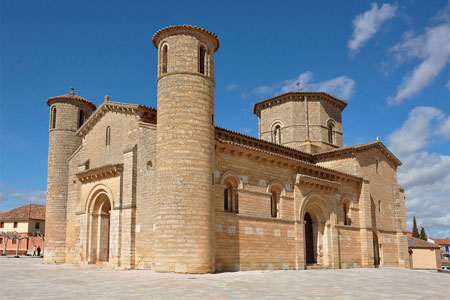
The Romanesque´s characterstics on architecture are:

- Thick walls which support stone roofs
- Round arches
- Sturdy piers
- Groin and varrel vaults
- Large towers
- Decorative arcading
- Small windows to keep the strenght of the walls

San Martin de Fromista in Palencia (Spain)

PAINTING

The Romanesque paintings had the following characteristics...

- Used to be frescoes
- It decorated vaults and apses
- Figures had a lack of depth and volume
- Religious themes with a didactic character

Pantocrator and the apostles

SCULPTURE

The main characteristics of Romanesque sculpture were:

- Educational and religious function
- Painted in bright colours
- Sculptures were adapted to fit into the space available
- unrealistic human figures
- Rigid clothes


ROMANESQUE IN SPAIN

Romanesque first developed in Spain in the 10th - 11th centuries in Lérida, Barcelona, Tarragona and Huesca, it´s called "First Romanesque" or "Lombard Romanesque".
- Very primitive style with thick walls, 
- Lack or ornamentation  
- Presence of ornamental archs

Church of Santa María de Taull in Lérida 


Arrived in Spain with the influence of Cluny through the Way of Saint James and ends with the construction of the cathedral of Santiago de Compostela

In this picture we can see the cathedral of Santiago de Compostela during Romanesque period
 (aprox. 1000 years ago)   


In this one we can see the cathedral of  Santiago de Compostela as it is today after Baroque influence.

VIDEO ABOUT -> ROMANESQUE ART